My new book, *IL BLOG DI CIRO DISCEPOLO: IX PARTE* (Ciro Discepolo’s Blog: Part IX), is now available in a hardcover edition.
What is the hardcover version, and what is its purpose?
What I did this morning was primarily an experiment, with an eye toward a few future publications and the desire to preserve—in a particularly beautiful and sturdy format—a copy of certain books that are especially dear to me.
In the meantime, this initial test seems to confirm that I had correctly interpreted the new Amazon/KDP rule, which limits users to no more than two new titles per week for each publication type.
As some of you may know, I’ve already received two consecutive “bans” (or temporary blocks): one eight days ago and another the Sunday before that.
What does this mean?
It means you cannot publish an unlimited number of different editions of the same book or of different books. The rule I am testing in practice seems precise: no more than two publications per week for each category.
Let’s look at a very practical example—as practical as it gets.
Eight days ago, I had just published the paperback version of my book *Cape Town: Tre Primavere di Seguito* (Cape Town: Three Springs in a Row), which—as a second edition—I had deliberately prepared directly in English.
Immediately afterward, I set out to create the Kindle edition, but I was blocked until the following Sunday—yesterday—because I had already used up my “golden tokens” for that week.
So, I started up again yesterday, and—follow me closely here, because this clarifies what the “two-title-per-week-per-category” limit actually means—the first thing I did was create the Kindle edition of that book. Once I had obtained this, I was able to use my first Kindle Translate “weekly token” to translate the English Kindle edition into the other languages included in this program: Italian, French, Brazilian Portuguese, Spanish, and German.
By that point in the morning, I had used:
• 1 of the 2 available slots for creating a Kindle edition;
• 1 of the 2 available slots for Kindle Translate, thereby generating the five Kindle editions in the aforementioned languages in a single operation.
I proceeded to create my new book, *IL BLOG DI CIRO DISCEPOLO: IX PARTE*, in a print edition directly in English.
Then, I used the second Kindle slot to create the eBook version of the same book and the second Kindle Translate slot to produce the other five language versions.
At that stage, based on my interpretation of the new rule, I still had two hardcover print publications available.
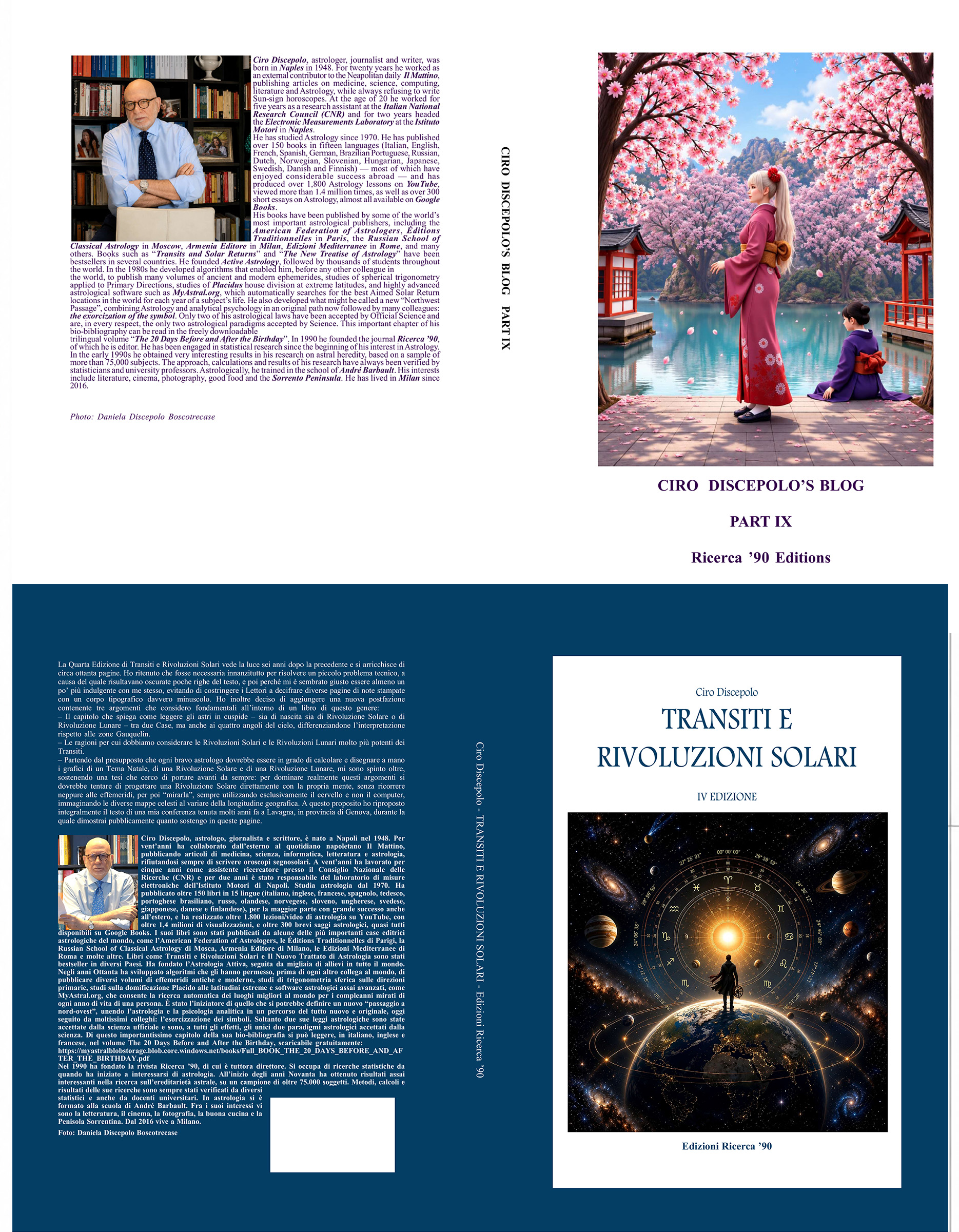
And that is where the experiment shown in the images began.
I created a new print edition of *IL BLOG DI CIRO DISCEPOLO: IX PARTE*—this time not with the standard softcover, but with a hardcover.
Naturally, this is a much more expensive product, and I imagine it is intended only for specific books: those we wish to keep for a long time—perhaps keeping them constantly on a desk or a dedicated bookstand—because we consult them frequently, making them subject to significantly more wear and tear than others.
The production process is slightly more complex because one must adhere to an extremely precise layout grid for the front cover, back cover, spine, hinges, and safety zones. Here, the margins are strict, and there is no room for error.
In the case you are looking at, even keeping the price as low as possible, the cost still comes to 68.37 US dollars. Very much so, certainly.
The paperback version of the same book sells for $30 and even allows for a profit margin. The hardcover edition, on the other hand, is designed primarily as a keepsake.
There is also a very simple explanation for the particularly high cost: this first hardcover book of mine runs to 502 pages, all in color and printed in premium quality.
But the experiment didn’t end there.
According to the new rule applied by Amazon/KDP, after this initial publication, I should still have had a second weekly slot available for a hardcover release.
So, we decided to put that to the test.
We completely reformatted *Transiti e Rivoluzioni Solari – IV Edizione* (Transits and Solar Returns – 4th Edition), reducing the 673 pages of the previous layout to 539 pages in the 6×9-inch format—without summarizing or cutting any content—in order to fit within the technical limit set by KDP for that configuration. The final interior layout is indeed 539 pages long.
Then, we created the new hardcover design using the exact dimensions required by KDP.
And the result of the experiment came in just a few minutes ago:
the second hardcover was also accepted by Amazon/KDP and has been submitted for publication.
In this second instance, the minimum price came out to 70 euros.
So, barring any further surprises, this week’s real-world test seems to confirm my interpretation: the two-title weekly limit is calculated separately for each type of publication.
Naturally, I will continue to experiment and verify how these new rules work in practice. But, at least for today, both of my “golden tokens” for hardcovers have been used up.
And, I’d say, quite successfully too.